
What are you looking for?
Easebourne Street, Easebourne (Lower North)
Easebourne Street, Easebourne
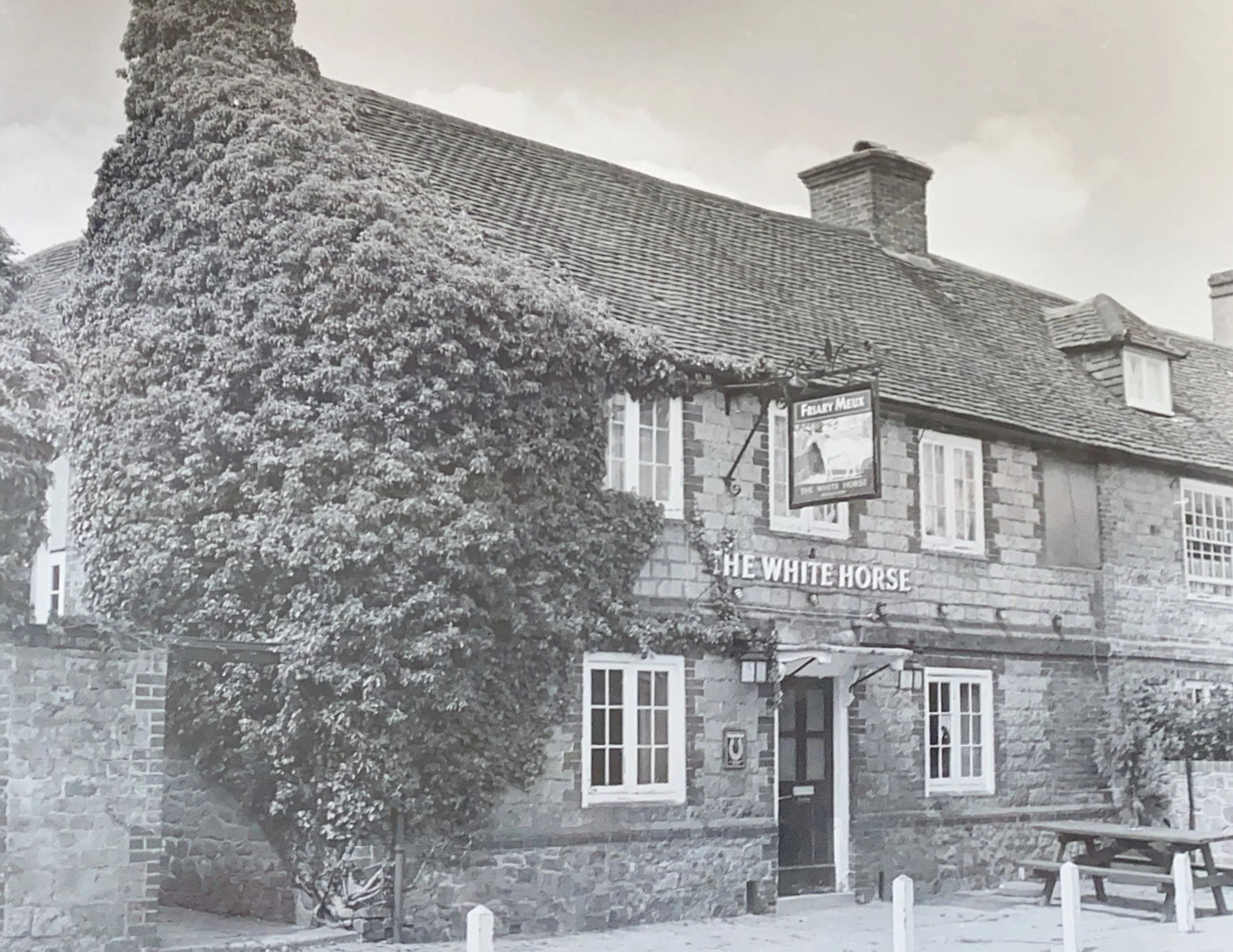
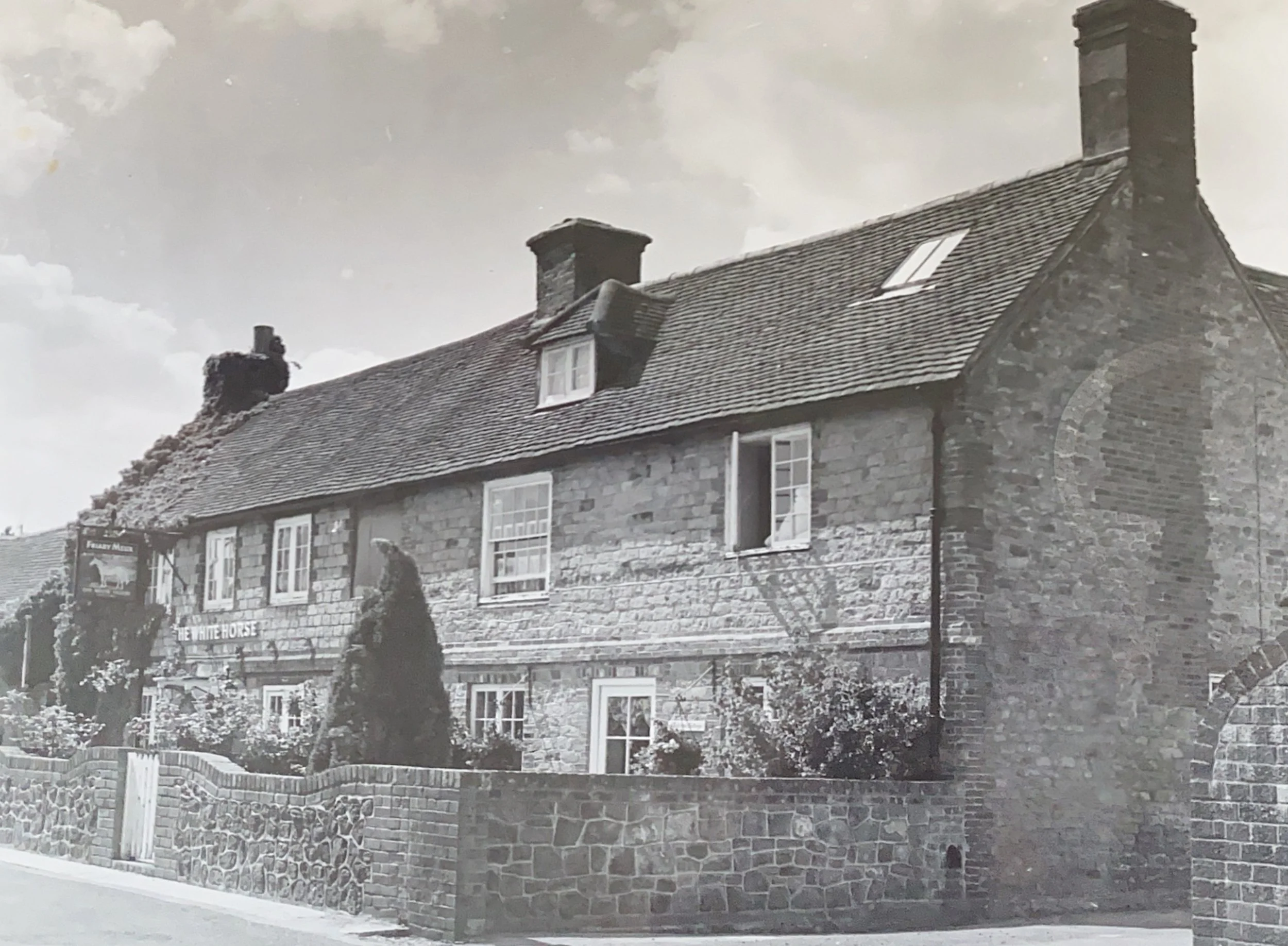
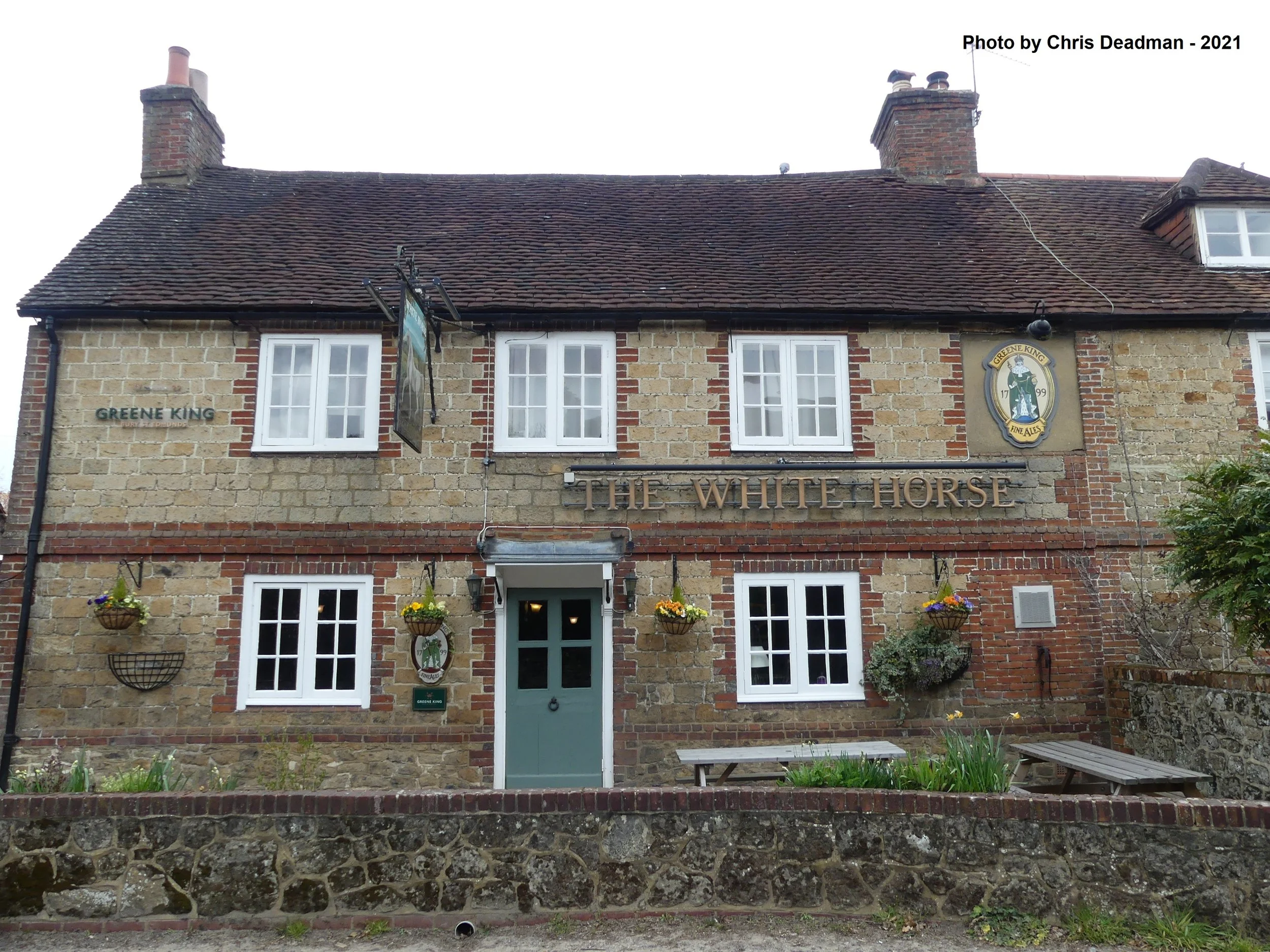
The White Horse Inn and
Page's Stores
Listed 26.11.87, Grade II
One building now Inn and Shop. C18. Stone with red brick dressings and quoins. Brick stringcourse. Tiled roof. Casement windows. Doorway with flat hood on brackets. Large shop premises built out in front of ground floor of north east end. Two storeys. Five windows and one blocked window space.
Listing NGR: SU8955422661
Page’s Stores now a residential dwelling
White Horse Inn
The innkeepers at the White Horse Inn in the 1880’s were George and Mary Saunders. As a teenager, George had lived in Chichester and was a bargeman at the age of 16. George and Mary married in Bosham in 1873. When George died in 1897, Mary became the Publican and Head of the Household (as evidenced by the 1901 census).
In 1902 Mary married George Harrison and both continued to live and work at the pub until at least 1915. Although the Inn was a 10 roomed dwelling, the only occupants on the night of the 1911 census, were the publicans, Henry Welsh a servant (age 17) and a visitor, Alfred Weller (age 15) whose occupation was noted as a Stableman.
Page’s Stores
In August 1894, Miss Annie Crump who was the Mistress at the Elementary School, married William Page in Easebourne. They lived in an 8 roomed dwelling, so it is unlikely they were living in a building that has since become listed. However, William Page’s occupation was a grocer. His father, Jesse Page was noted as being a grocer and general dealer in the Easebourne commercial section of the Post Office directory from 1878 until Kelly’s directory of 1899. Jesse Page was buried in Easebourne on 28 December 1900. The 1905 and 1911 Directories list William Page as the grocer. His son, Harry, was a grocer’s apprentice at age 15. Was this the family that gave the store its name?
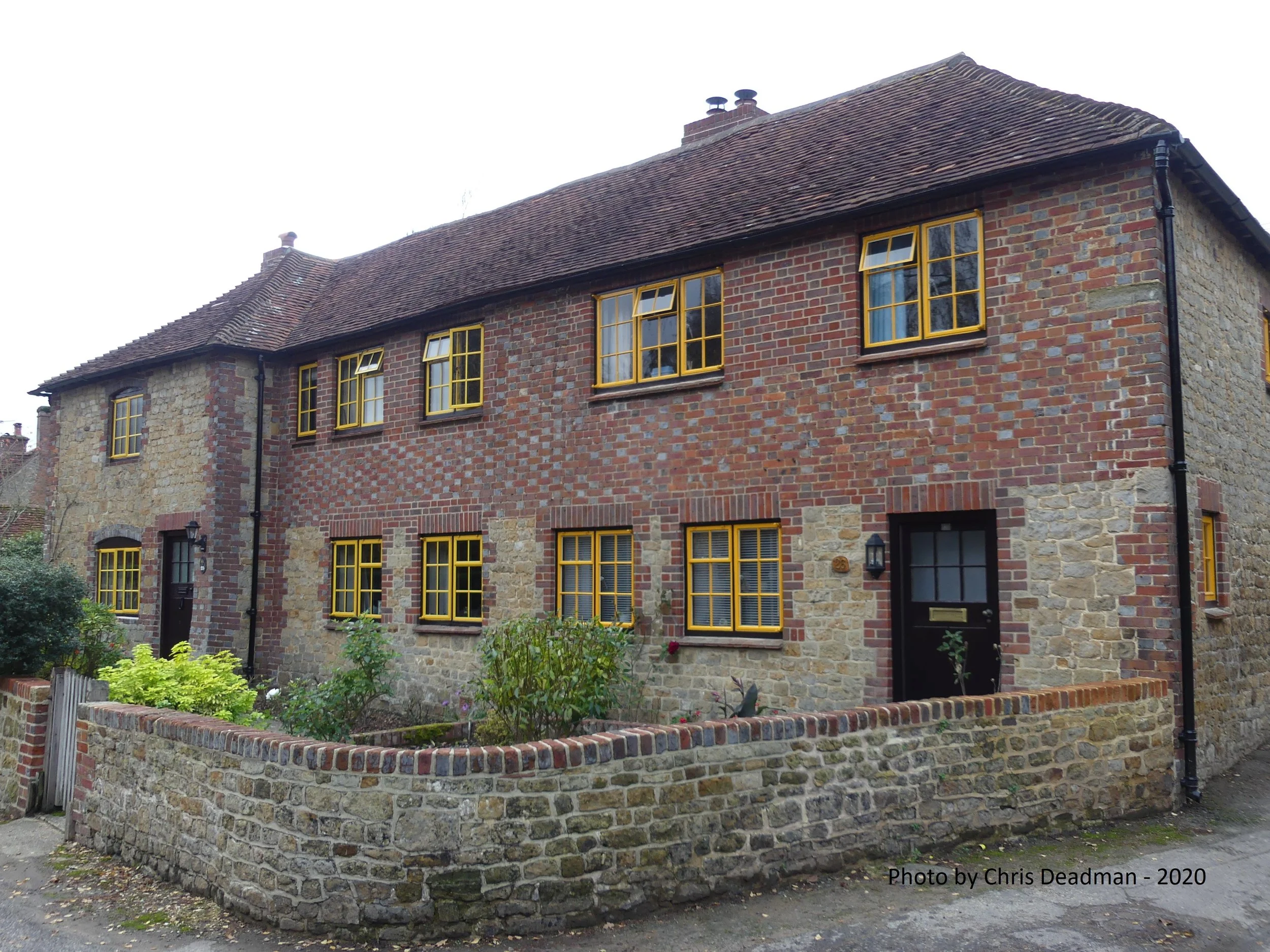
Easebourne Street, Easebourne
Nos c25 and c26
Listed 26.11.87, Grade II
House, now two. C18. No 25 is stone rubble and projects slightly with a hipped roof. No 26 red brick and grey headers. Tiled roof. Casement windows. Two storeys. Six windows. Included for group value.
Listing NGR: SU8959022672
26 Easebourne Street
Ralph Dummer, Private TF/200643 of the Royal Sussex Regiment and commemorated on the Easebourne and Jerusalem War Memorials, was living here in 1911, with his parents Samuel and Eliza, and his sister Eva (age 18). Ralph was a Drapers Errand Boy.
No 26 Easebourne Street is noted on the 1911 census as being a dwelling of three rooms, one of the smallest listed dwellings in the street. Ten years earlier the house would have felt very crowded when Ralph was living with his parents as well as his older brother Albert (age 21, a Postman) and his sisters Bessie (age 14), Blancher (age 12), Ada (age 9), Eva (8 age) and Bertha (age 1).
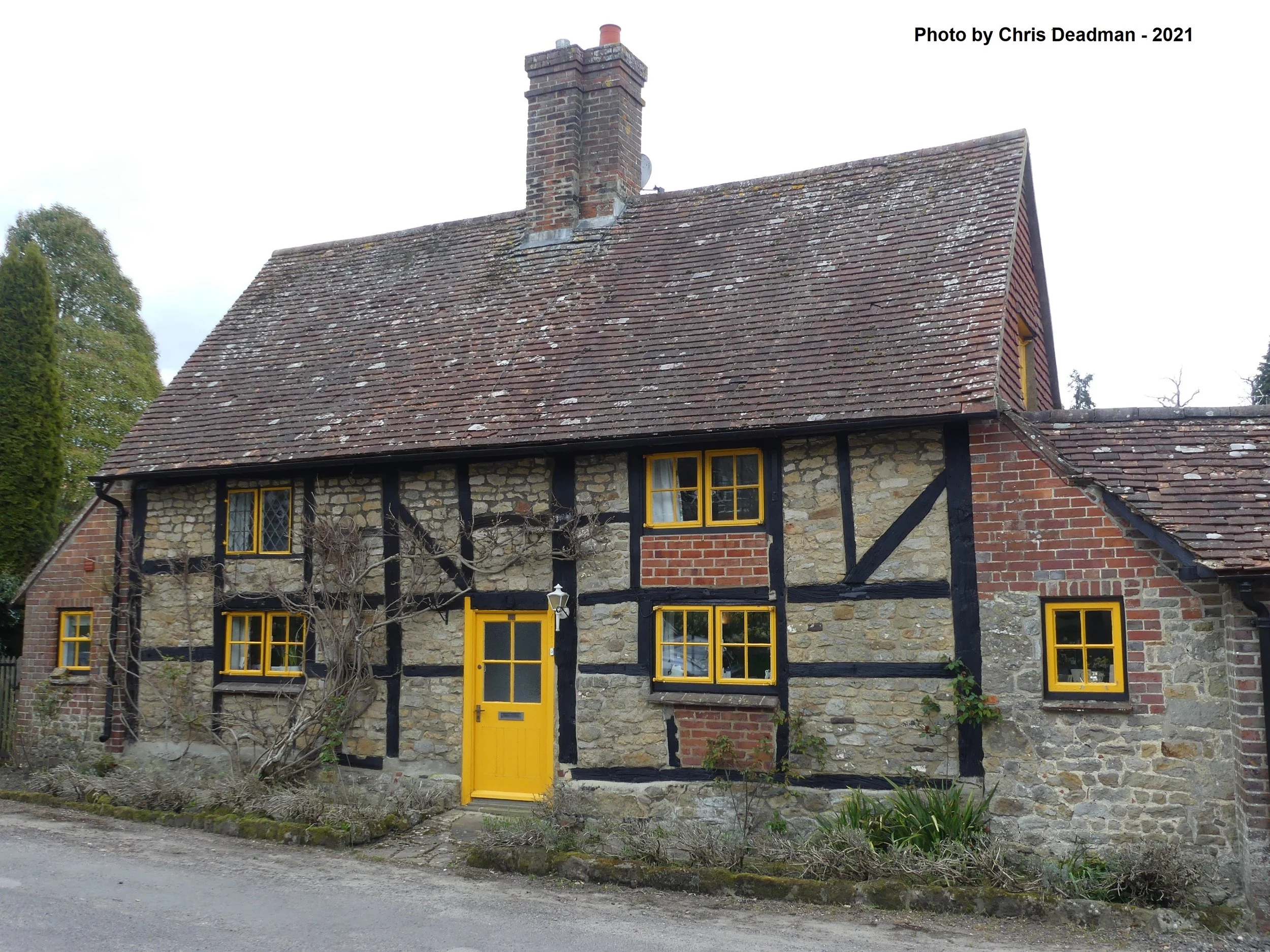
Easebourne Street, Easebourne
Glazier's Lane No c27
Listed 26.11.87, Grade II
Cowdray Estate Number. C17 or earlier timber-framed building with stone rubble infilling on a stone plinth. South front tile-hung. Tiled roof. Casement windows. Two storeys. Two windows.
Listing NGR: SU8960422704
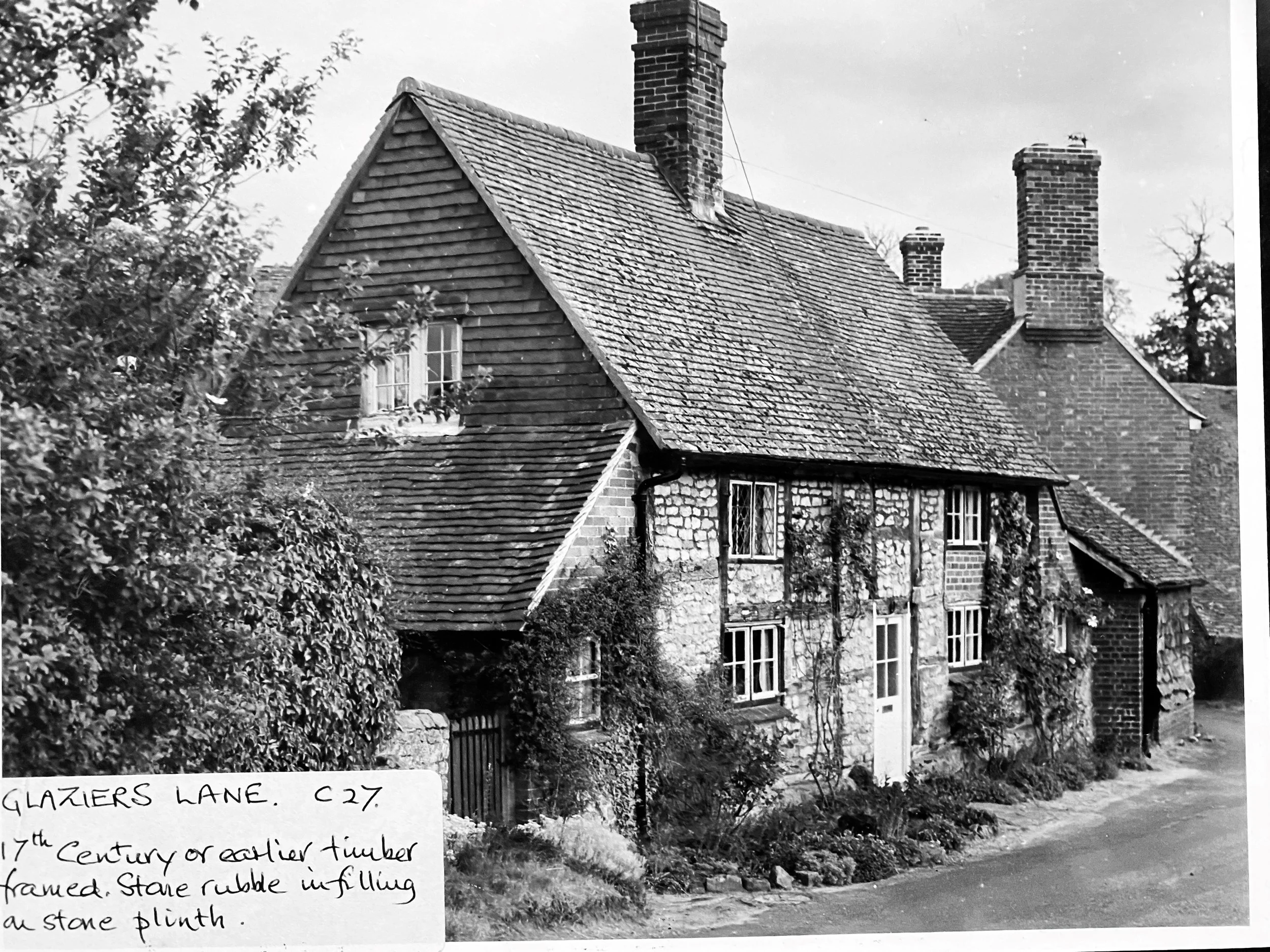
27 Glazier’s Lane
This was the home of Walter Dabbs (age 50) and his wife Ellen Sarah (age 42) at census time in 1911. Walter and Ellen were married in Easebourne on 14 October 1894.
Their family consisted of two daughters, Hilda Gertrude (age 7) and Lucy Ella (age 3); both born in Easebourne. Walter worked as an “Estate Carter”. Living with them as a boarder was Thomas Furlong, single (age 23) who was employed as a Chauffer.
When Walter was born in 1861 to Samuel and Lydia Dabbs the family were living at “Upper Street”. Walter’s sisters were Sarah and Mary; both five years old. All the family were born in Easebourne. Lydia (nee Damer) married Samuel in Easebourne Parish Church on 29 July 1854.
Walter was living in “Lower Street” in 1881 and working as an Agricultural Labourer.
In 1901, Walter was head of his household living in Glazier’s Lane with his wife Ellen and his widowed mother Lydia Dabbs (age 71). Ten years later, William’s mother Lydia was living nearby, in a two-roomed dwelling, with her single brother William Damer (age 70).
Rare prayer book called A Little Memorial written by Father Arias and dated 1602 was found during internal renovations in 1963 by Leslie Howell and sent to British Museum. (source: West Sussex Gazette 26 Mar 90)
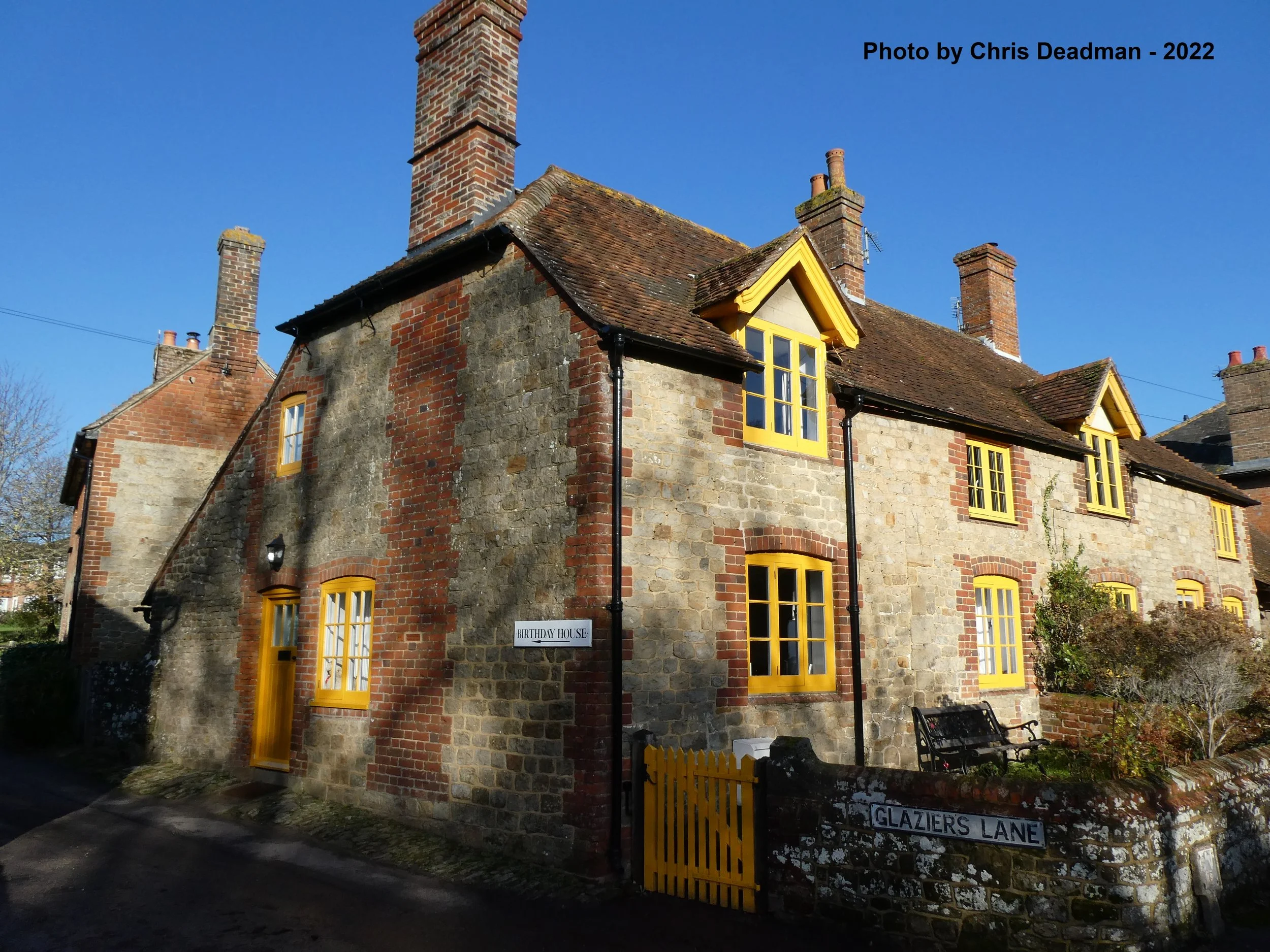
No 30 Easebourne Street
William Henry Denyer (age 24) a “Grocers Porter” was the head of this household in the 1911 Census. William’s marriage to Bessie Priscilla (nee Baker) in the autumn of 1909 was registered in Midhurst. Their son, also called William, was born in Easebourne in 1910.
Both William and Bessie had connections with the Harting area. In 1901 William, age 14, was living with his family in Harting Combe. His occupation was “Farmer’s Son, Under Carter”.
Bessie was christened, with her twin brother Alfred, in Harting parish church on Easter Day in April 1890. Alfred only lived a few months; his death being registered in autumn 1890. In 1901, Besse was living with her parents, Amos and Elizabeth, in West Harting Street.
No 29 Easebourne Street
In 1911 this was the family home of Arthur Dark, a Labourer (aged 38) and his wife Annie (aged 33). Living in this four roomed dwelling, their family consisted of a daughter, Florence Annie (age 13) and three sons, William Arthur (age 11, Harold (age 10) and Albert (age 8).
Arthur’s parents were living in Nuthurst (Horsham district), where he was born and baptised in 1873. Census records reveal that Arthur’s was a scholar (age 8) in 1881 and living in Old Shoreham where his father was a Labourer. Ten years later Arthur and his family were resident in Farnham Road, Guildford. Both father and son’s occupations were recorded as Carters.
Arthur married his wife Annie (nee Hills) in Eastbourne in late summer 1897. Their first born, Florence, was born a year later in Eastbourne. Sons, William and Harold were both born in the Horsham area in 1900 and 1901 respectively. Sometime between 1901 and 1903 the family had moved to Easebourne where Albert was born.
The family’s neighbours were William and Bessie Denyer.
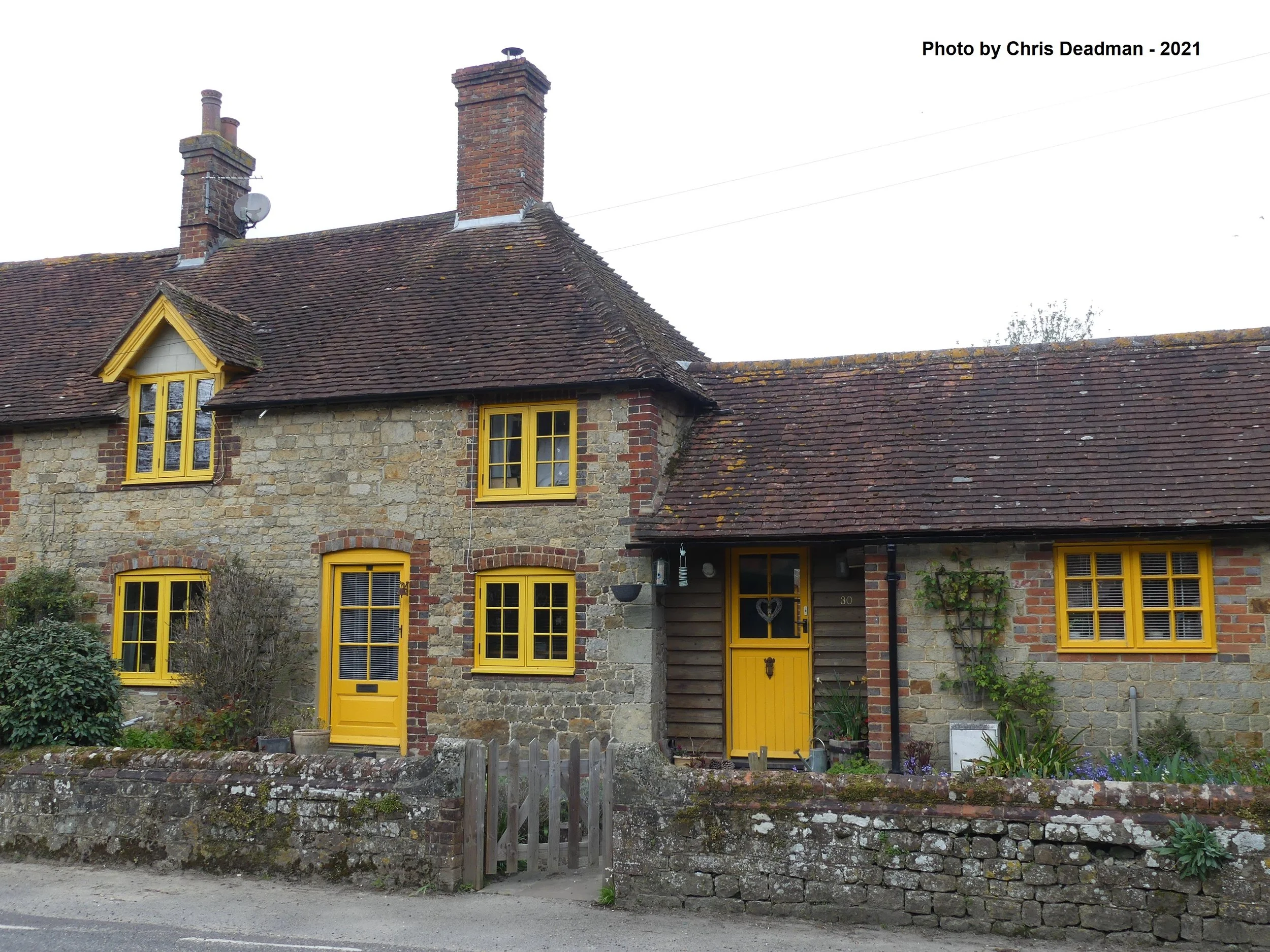
Easebourne Street, Easebourne
Nos c29 and 30
Listed 26.11.87, Grade II
House, now two. C18. Stone rubble with red brick dressings and quoins. Hipped
tiled roof. Casement windows. One storey and attic. Four windows. Two dormers.
Listing NGR: SU8961522686
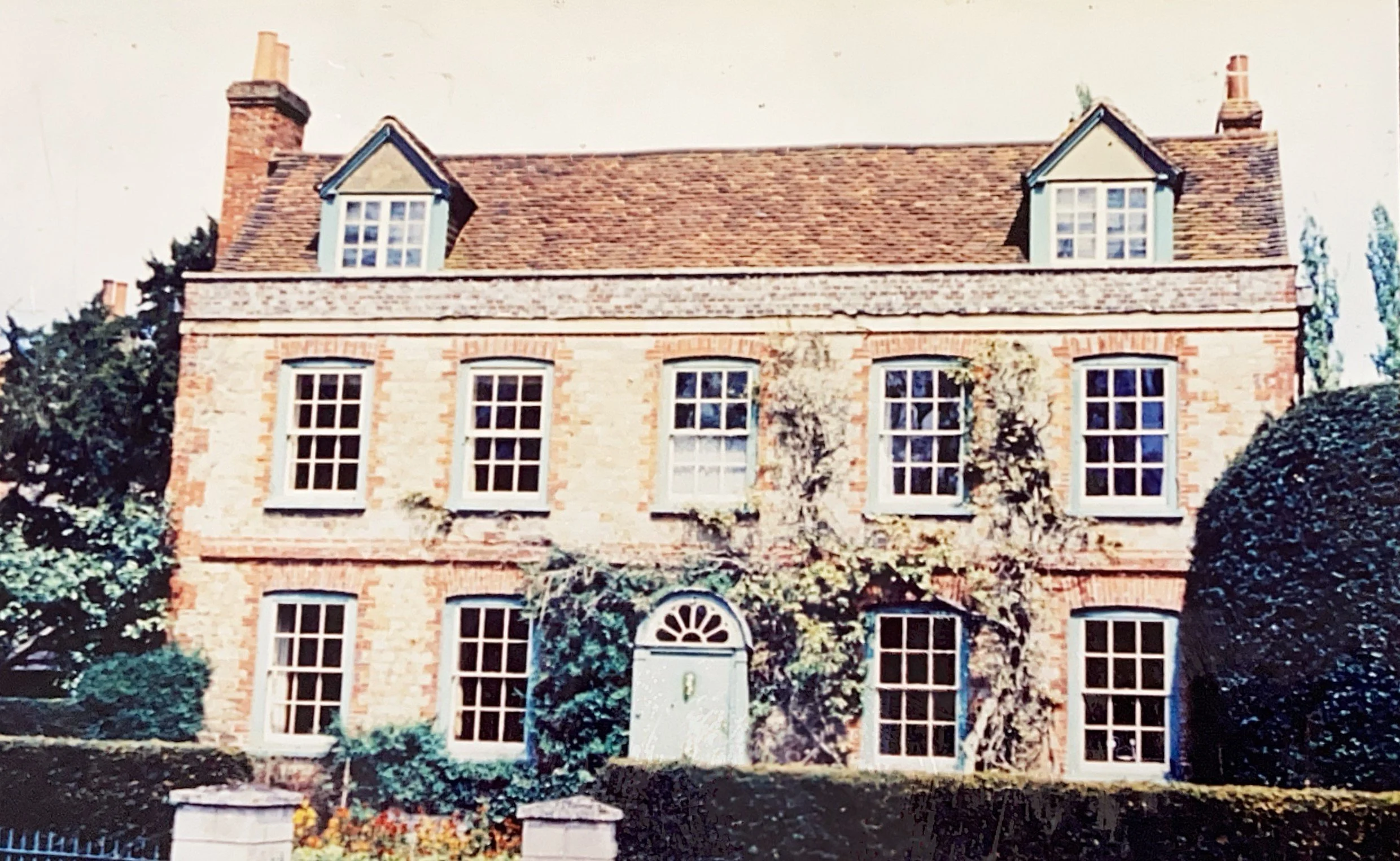
The Old Vicarage
With 11 rooms, The Old Vicarage is one of the larger listed dwellings noted in the 1911 census. On that night, the widowed Parish Vicar, Joseph Cummin, was at home with this two single daughters Elsie (age 34) and Mary (age 29).
It was noted in red on the Census form that his two eldest daughters Vinvela (age 40) and Christobel (age 36) were “Suffragettes wandering about all night”.
Note - As part of the protest against the government’s continued refusal to grant women the vote, the suffragettes organised a mass boycott of the census. Many women made sure that they stayed away from the family home all night, in other cases the head of the household refused to list the female household members, sometimes entering a protest slogan on the form.
The “Living” details for the vicarage are listed in the Post Office Directory / Kelly’s Directory as follows:
In 1859 it was a “perpetual curacy” valued at £130 with residence in the gift of the Right Hon. Earl of Egmont. It was held by Rev. John Edward Serres.
Continuing as “a perpetual curacy” and remaining in the gift of Hon. Earl of Egmont, in 1866 it was only valued at £106 and held by Rev. Edward Tufnell M.A. of Trinity Hall, Cambridge. Perpetual curates disappeared in 1868 and the holders could then legally call themselves vicars.
In 1890 the value of the living was £100, remaining in the gift of the Earl of Egmont and held since 1879 by Rev. Henry Wood, who was also the domestic chaplain to the Earl of Egmont. Three years later the Vicar became Joseph King Cummin, M.A. of Trinity College Dublin but the living was only £116 in 1899.
In 1911 the living was £200, in the gift of Lord Cowdray J.P. and remained held by Rev. Joseph Cummin, until the following year when Rev. Charles Edward Hoyle M.A. of Pembroke college, Cambridge became vicar.
Easebourne Street, Easebourne
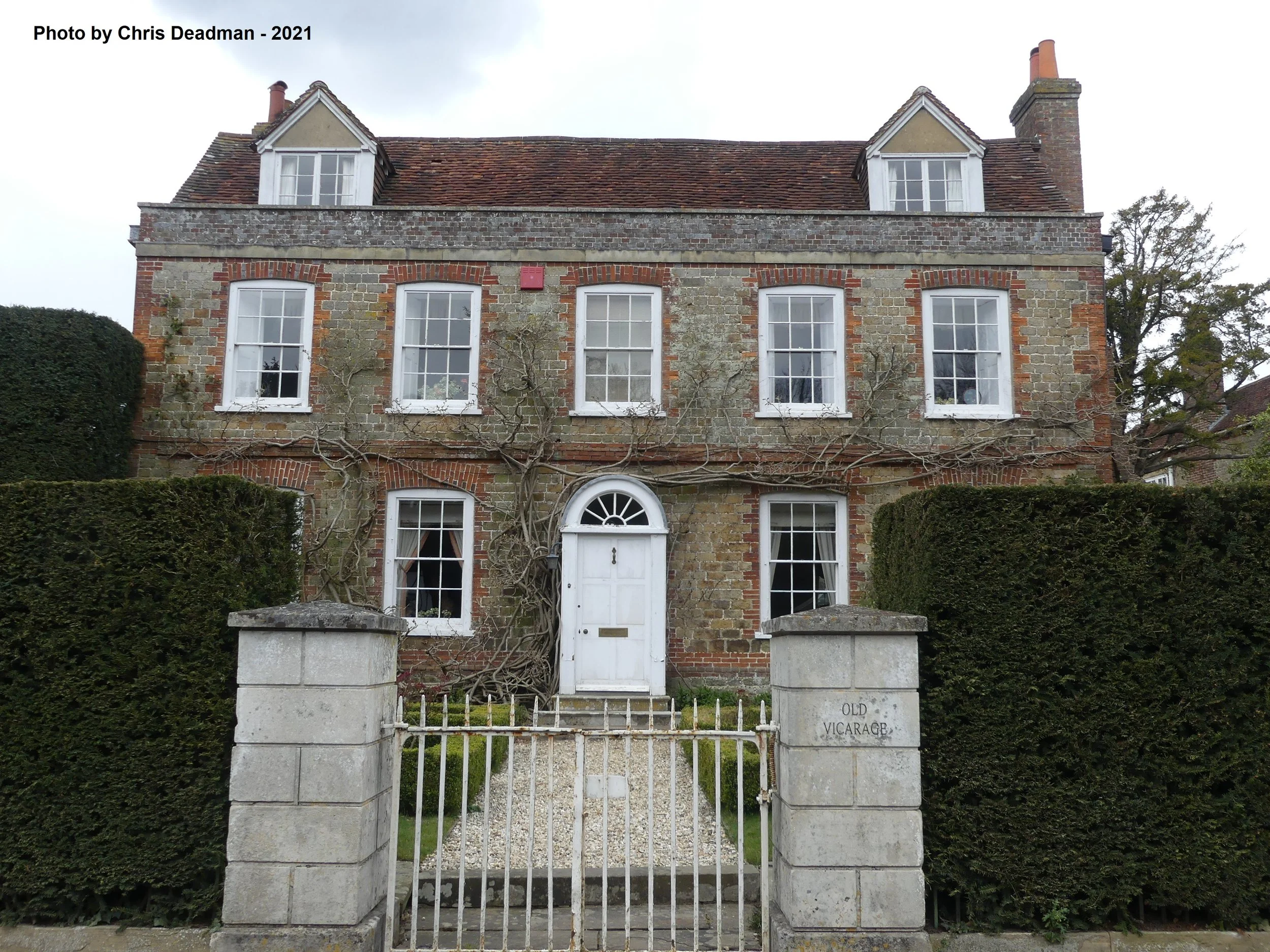
The Old Vicarage
Listing 18.06.59, Grade II*
House. C18 front to a possibly older building. Ashlar set in galletting with red brick dressings, quoins, stringcourse and parapet. Tiled roof. Glazing bars intact. Projecting porch with semi-circular head, lead top and door of six fielded panels. Brick chimney breast on north east wall. Two storeys and attic. Five windows. Two gabled dormers.
Listing NGR: SU8965822720
Photograph below from 1960
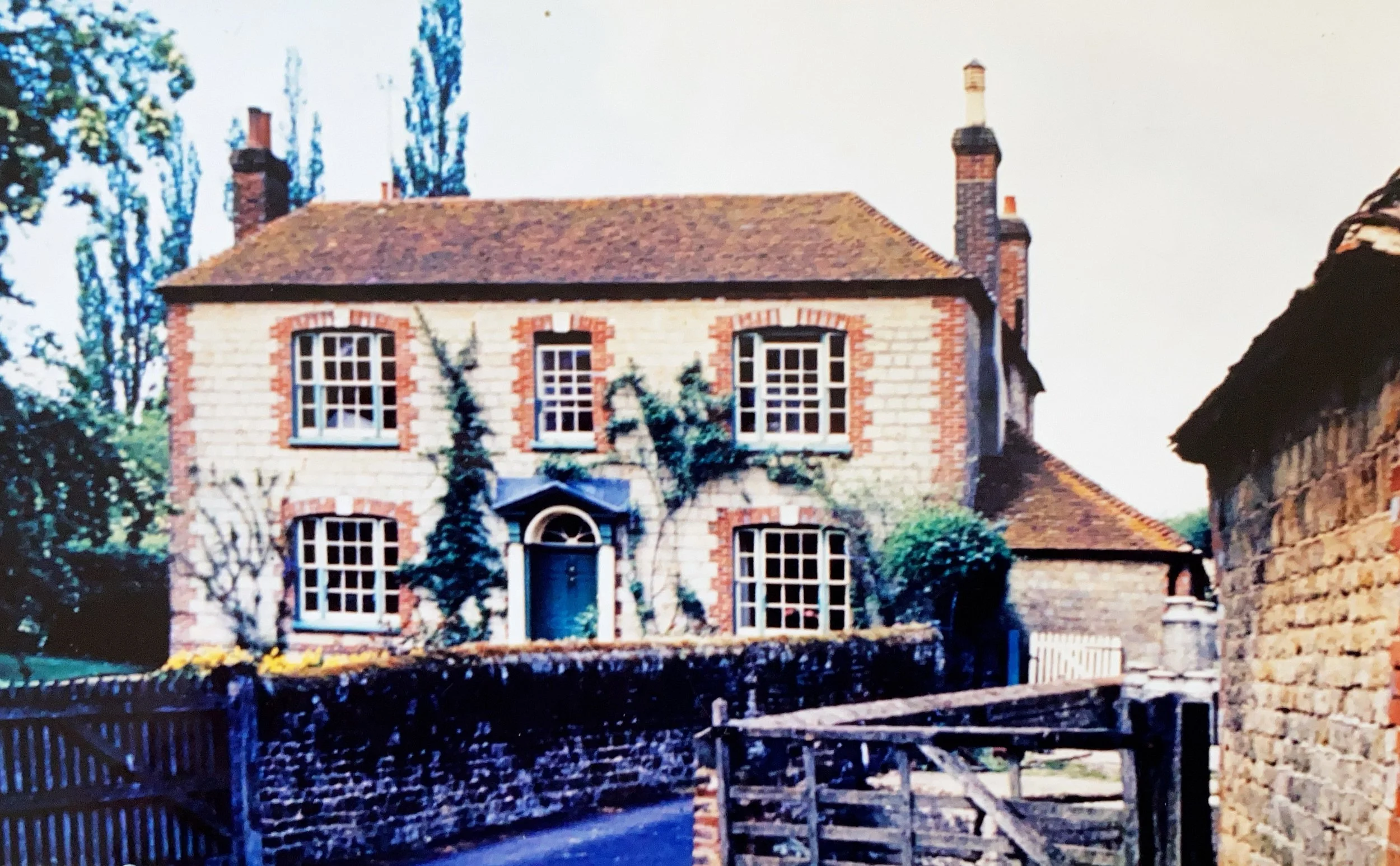
Easebourne Street, Easebourne
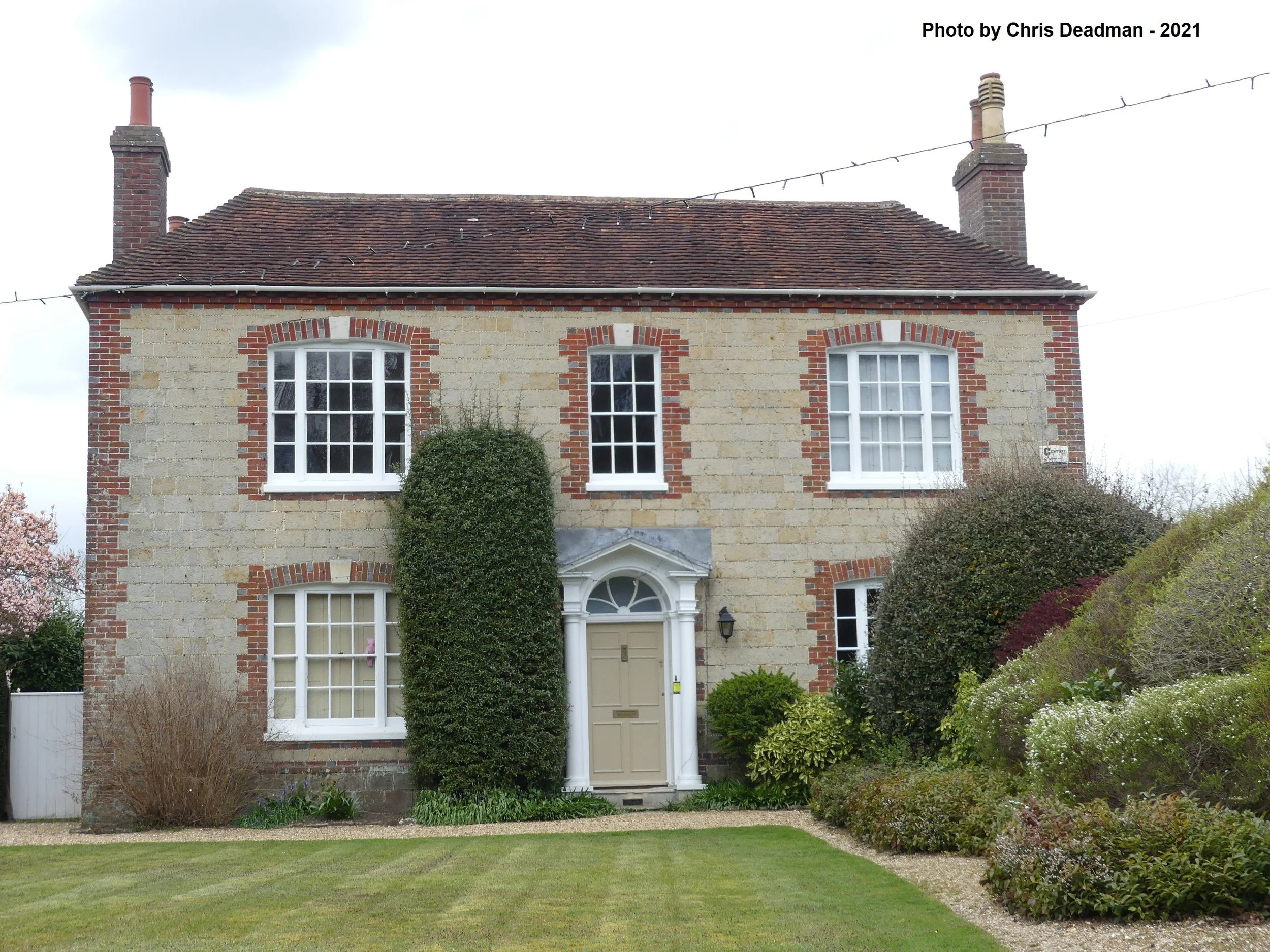
Bellings Farmhouse
Listed 18.06.59, Grade II
House. C18. Stone with dressings, quoins and eaves dentil cornice of red brick
and grey headers. Hipped tiled roof. Windows with key blocks and glazing bars intact, outer one having three lights. Doorway with Tuscan columns, pediment and semi-circular fanlight. Two storeys. Three windows. Photo below taken 1960.
Listing NGR: SU8966222746
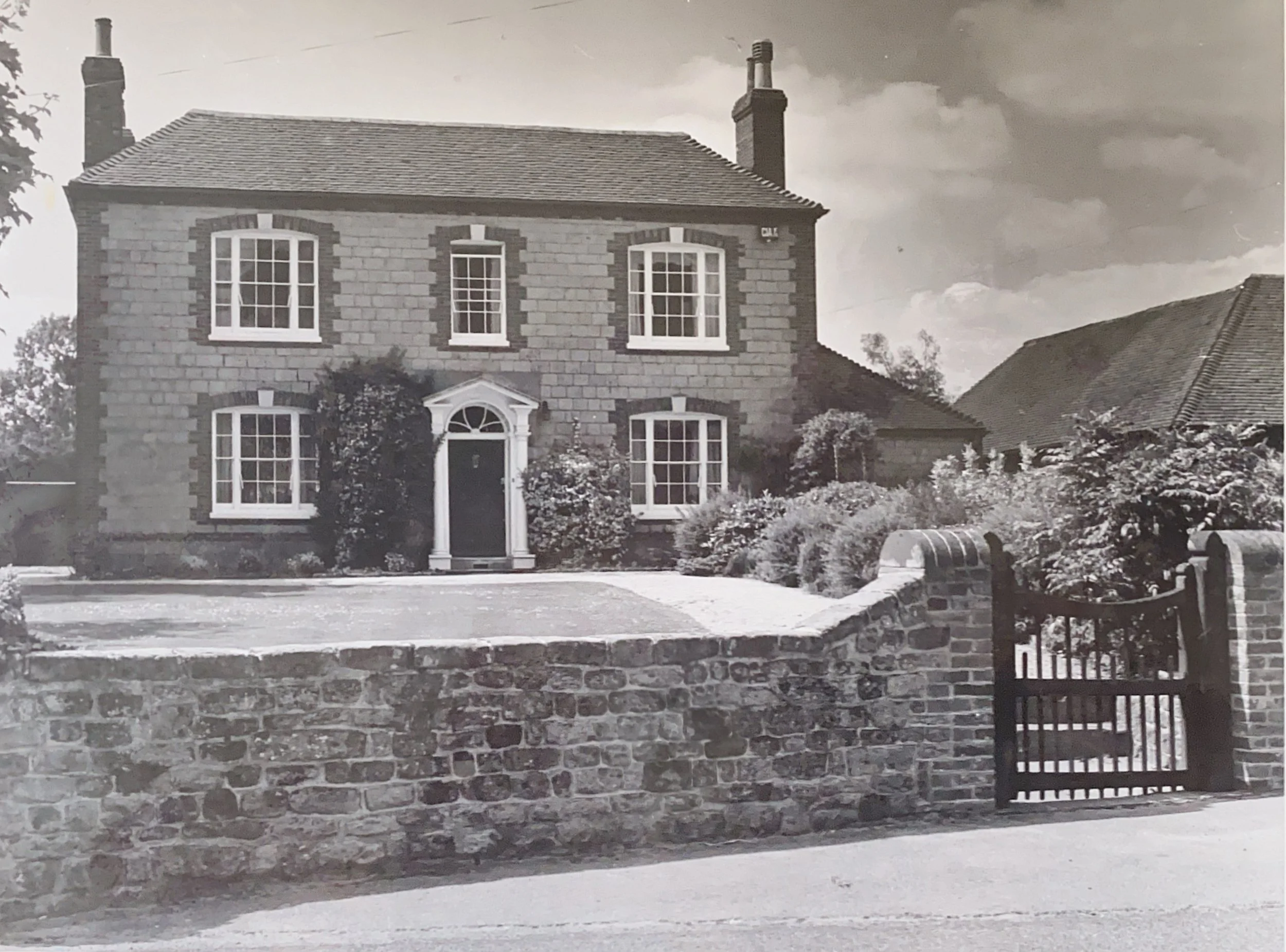
Bellings
The Kelly’s Directories of 1890 and 1899 list Richard Summerton Bennett (age 73) as the Farmer at Bellings Farmhouse. Living with him in 1891 were his wife, Elizabeth Ann (age 64), their son, Henry Tupper Bennett (age 32) and two female servants: a domestic and a cook. (census details)
Richard and Elizabeth were married in April 1851 in Lewes; Notice of their marriage appeared in the Sussex Advertiser a month later.
Richard had been born in Worthing and this was where he was living in 1861 as Head of his own Household. With him were his wife and son, Henry Tupper Bennett (age 2). Their sons, Sommerton Bennett and Arthur Burgess Bennett, were both born in Felpham in 1862 and 1863 respectively.
Henry Tupper Bennett was listed in the Kelly’s directories as the Hon. Sec. of the Easebourne Village Club in the 1890’s.
Richard’s death was registered in Midhurst in the winter of 1901 age 82. Probate was granted on 14 June 1901 and the beneficiaries of his will were his two sons. His wife Elizabeth had died in 1896.
Easebourne Street, Easebourne
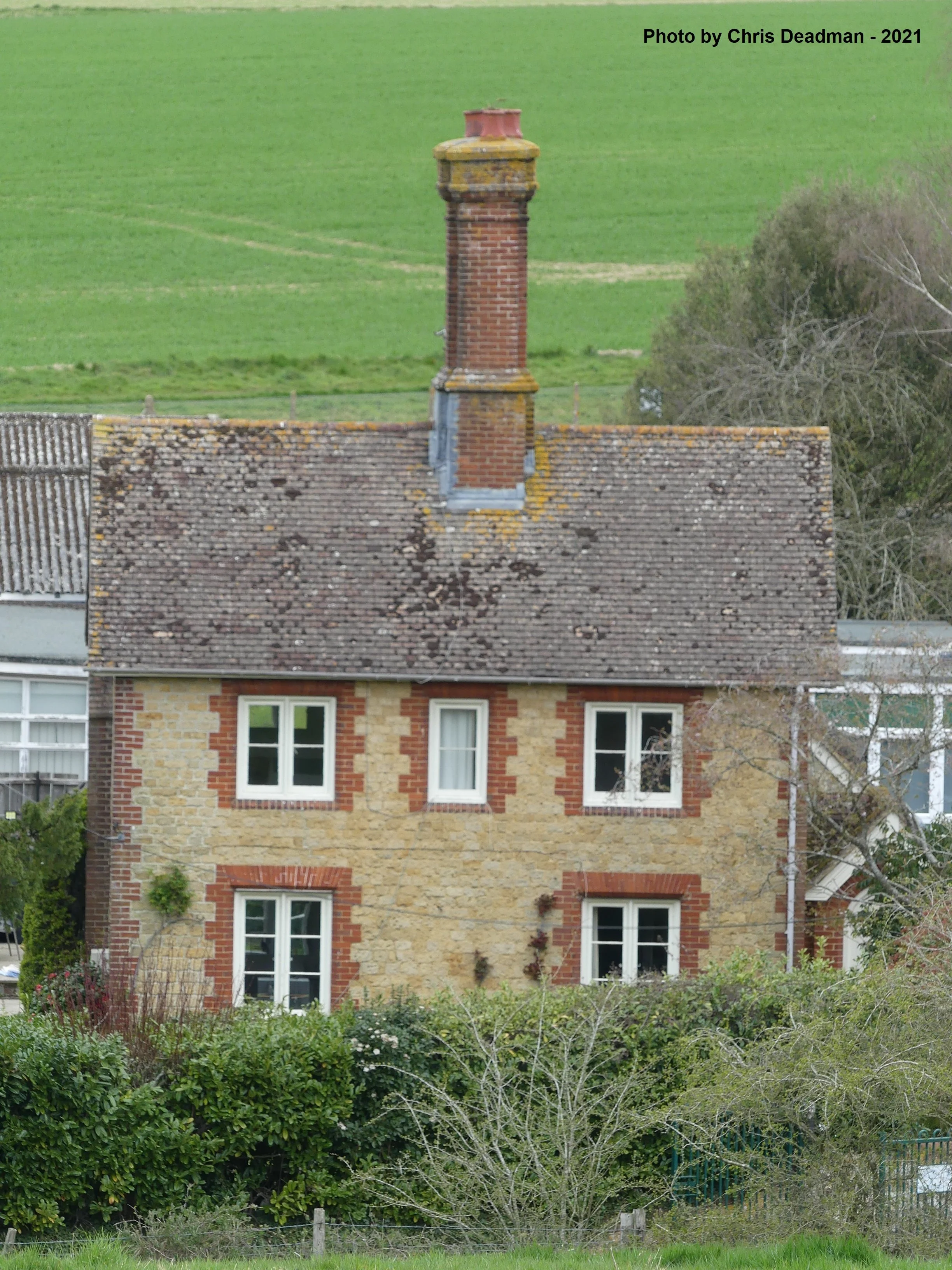
The Schoolmaster's House
adjoining the school on the
south west.
Listed 26.11.87, Grade II
House. Mid C19. Coursed sandstone with red brick dressings and quoins. Tiled
roof. Gable end north east and south west. Tall red brick chimney stack. Two
storeys. Three casement windows.
Listing NGR: SU8983622876
The School Masters House – a 7 room dwelling.
George William Singleton and his wife Ruth were resident in 1905 with their son George and two daughters Ruth and Una. George and Ruth married in 1885 in Alverstoke Hampshire and their first child, George, was born in 1886 in Wooton Bassett. By the time their first daughter Lucy was born in Easebourne in 1889, her baptism record lists George as the “Master of Easebourne Boys School”. Both George and his wife were teachers at the school, employed by the County Council. The Kelly’s Directory 1911 notes that George was the School “Master” but by 1915 the post was held by Frank Woodman.
Easebourne Street, Easebourne
Easebourne Parochial First School
Listed 26.11.87, Grade II
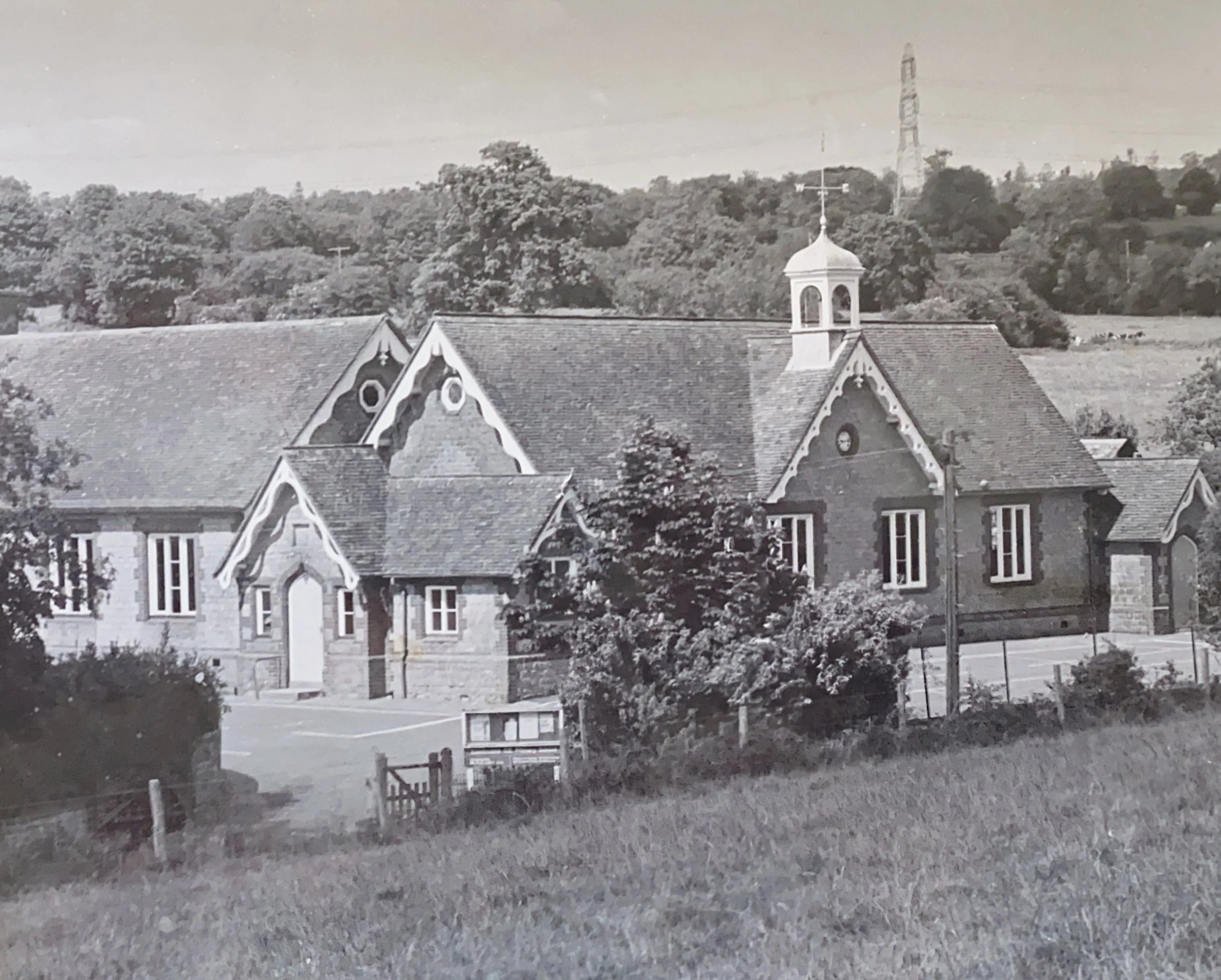
School. Mid C19. Coursed sandstone with red brick dressings and quoins. Tiled roof. Central gable with scalloped bargeboards and turret above containing a bell with cupola over. Projecting porch at each end with scalloped gable. One storey. Four casement windows.
Listing NGR: SU8985422892
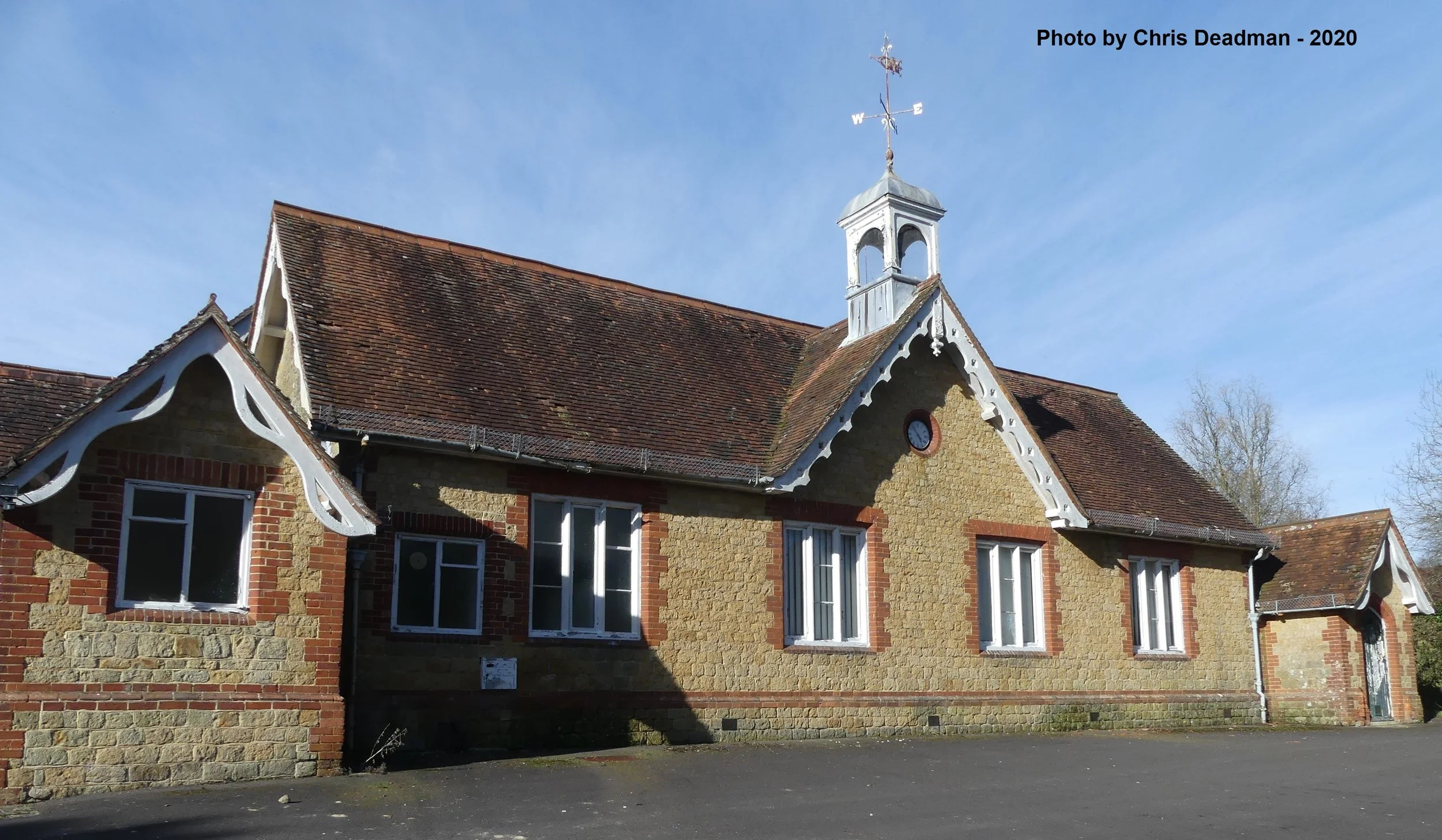
Public Elementary School
The Public Elementary School was erected in 1873 by the 6th Earl of Egmont. In 1880 the 7th Earl added a large room for infants and in 1885 a separate room for boys was added. The school was further enlarged in 1895. In 1902 The 8th Earl added a large room; fitted for a school museum.
George William Singleton was the master of the School in 1890 and his wife, Ruth was the infant’s mistress. At this time, the mistress of the School was a Miss Annie Crump. Annie, (25 years) was a Lodger with Eliza Baker and her son, at “Cowding Park” (misspelling of Cowdray) at the time of the 1891 Census.
In 1911, George Singleton and his wife Ruth remained master and mistress of the Elementary School respectively. However, after Annie Crump’s marriage, a Miss A N Roff became the infant’s mistress.
Miss Roff was supportive of the Suffragette movement and wrote a letter to the Census Registrar in which she wrote “I regret to have to refuse information as a protest against the voteless condition of women occupiers”. The Registrar, F.A. Tallant, completed the entry in the Census retrospectively with the words “entered as per instruction in letter dated 13/3/11” and wrote her name, estimated age and her single, marital status in red.
In 1911 the school rooms were used for “mixed scholars” and would hold 130 seniors, 115 juniors and 55 infants. Average attendance figures were 75 senior mixed, 82 junior mixed and 52 infants.
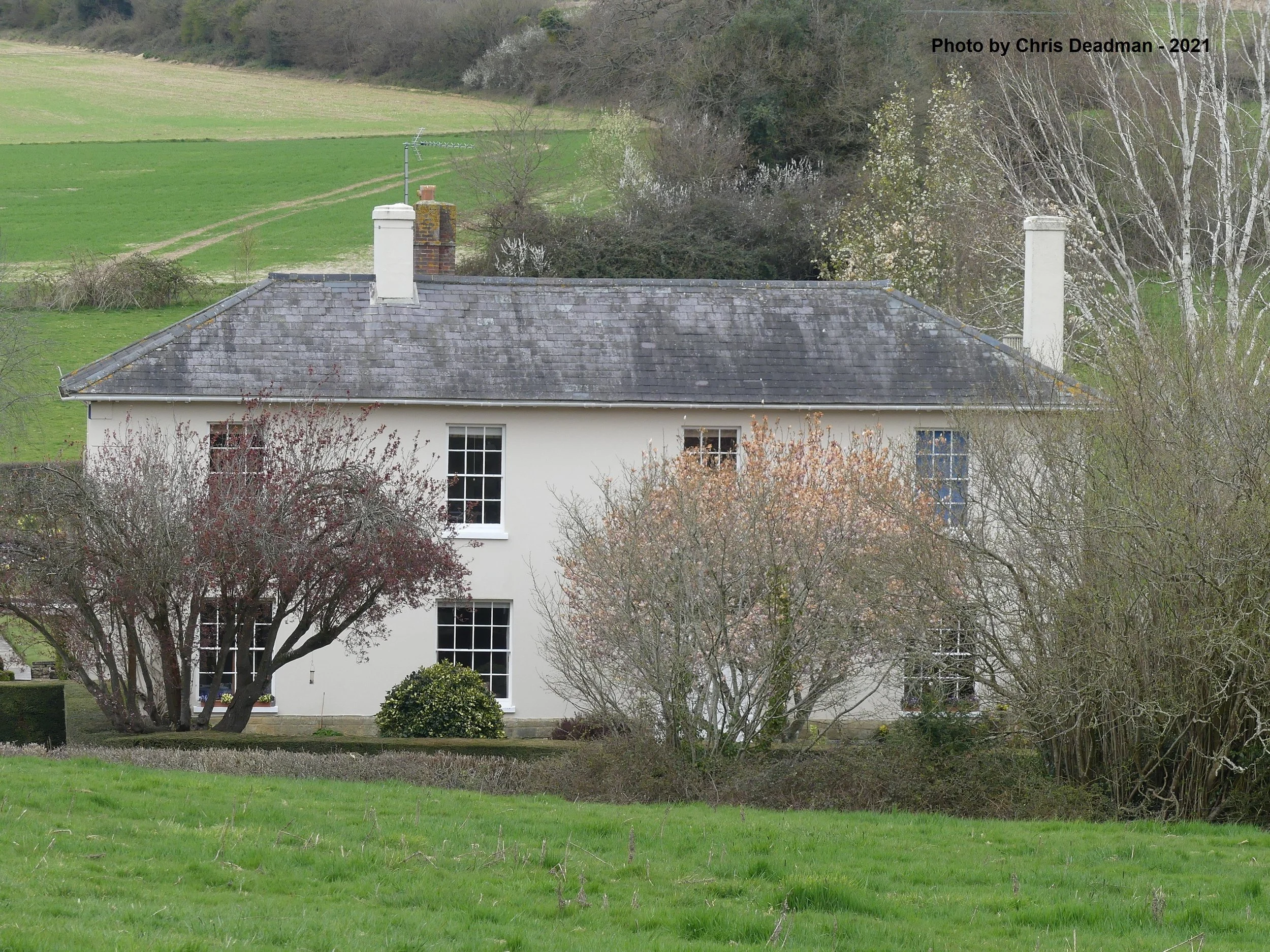
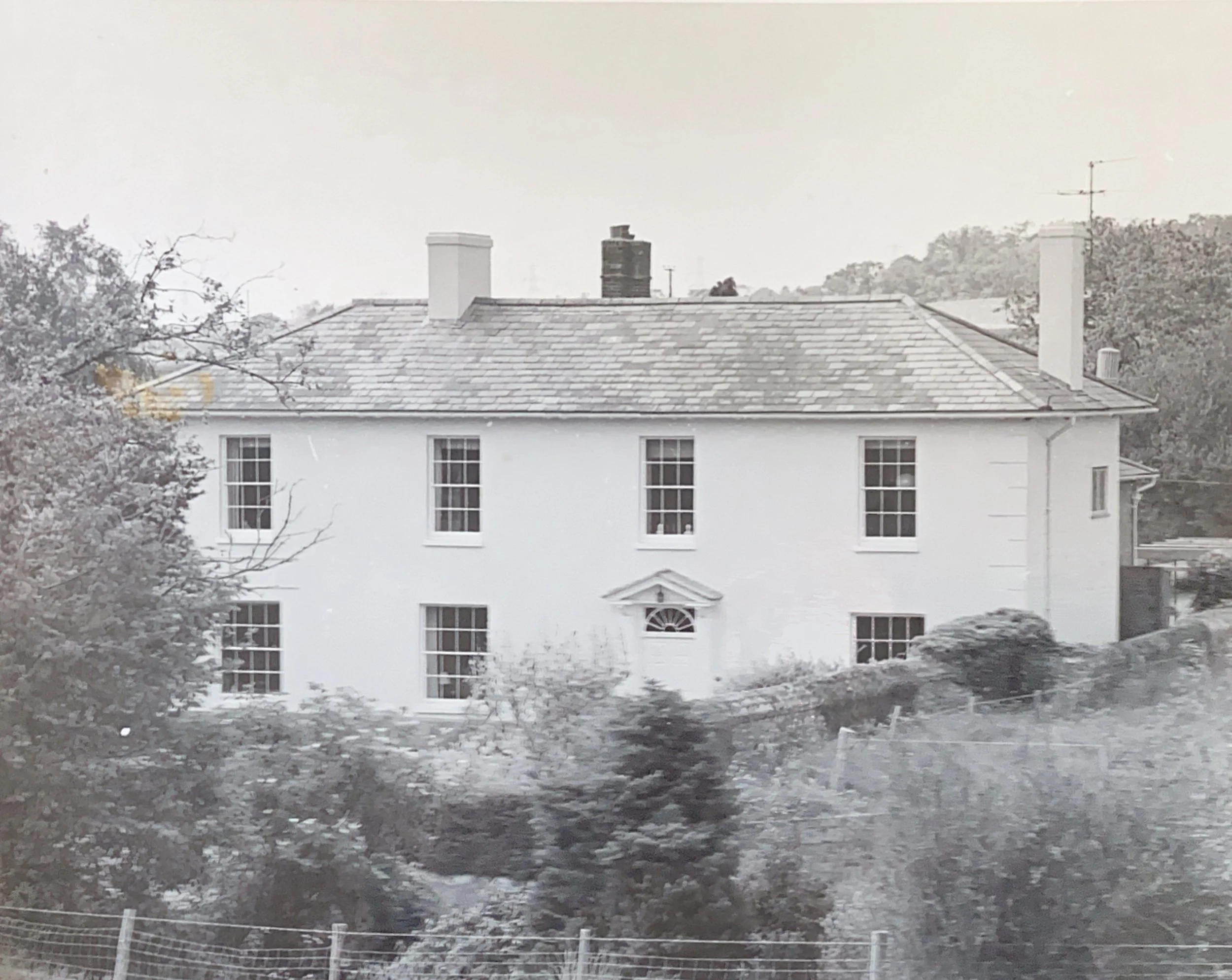
Francis Alexander Waddilove Buller made Park House his home in 1922 when he retired from the Navy. Francis was born in Plymouth in 1880 into a naval Family. His father, Alexander Buller, was a Captain in the Royal Navy when he was born, and rose through the ranks to Admiral and was eventually honoured in the 1902 Coronation Honours list. His elder brother was also in the Navy and commanded the Royal Yacht from 1921 to 1931.
Francis was commissioned into the Royal Navy and the 1901 Census records his occupation as “Lieutenant” and being “Royal Navy at Sea and In Ports Abroad”. He served in the First World War and was awarded the Distinguished Service Order in 1917. Two years later a Court Martial proved a negligence charge against him. The London Gazette dated 1 August 1922 recorded that Captain Francis Buller DSO had been placed on the Retired List “at his own request”. The London Gazette on 7 June 1929 records that he was promoted to Rear Admiral. He joined the Home Guard during the Second World War but resigned due to illness and died on 14 July 1943.
Park House
Some former residents of Park House were:
“Misses” Winter are first noted as being resident at Park House in the 1899 edition of Kelly’s Directory, and also appear in the 1905 edition. They were first listed in the 1890 edition but with no reference to their abode.
The “Misses” were Hester Sophia Winter (born 1842) and Elizabeth Amelia Winter (born 1851) the daughters of Thomas Winter, a farmer who was born in Pulborough in 1810. Thomas and his wife Elizabeth were resident in Easebourne in 1842 when Hester was born. Thomas was noted as a Farmer in the 1851 Post Office Directory where there were only 2 private listings and fourteen “Traders”.
The family were residing in “Upper Street” in 1861 when Thomas recorded his occupation in the census as “Farmer of 150 Acres Employing … Labourers & 3 Boys”. Thomas farmed in Easebourne until his death in 1879. The burial ceremony was conducted by the Rector of Lynch, Rev. Robert C. Bull, (who was residing at Vansell’s Cottage) on 14 October. Following her father’s death, Hester became Head of the Household living with her sister Elizabeth and employed a Cook and Housemaid. Hester described her occupation in the 1881 Census as an “Annuitant”.
The sisters never married and “Lived on Own Means” and continued to employ two domestic servants.
Hester died in September 1909 and Elizabeth was the main beneficiary of her will. Her second beneficiary was William W. G. Sadler with whom Elizabeth was living in Wimbledon as a “Boarder” in the 1911 Census.
Easebourne Street, Easebourne
Park House
Listed 26.11.87, Grade II
House. Early C19. Stuccoed front on stone plinth with rusticated quoins. Wide eaves bracket cornice. Hipped slate roof. Glazing bars intact. Doorway with flat hood on brackets. Rear wing of coursed rubble. Two storeys. Four windows.
Listing NGR: SU8999622972
Easebourne Street, Easebourne
Nos c38, 39 and 40 (Holly Cottage)
Listed 26.11.87, Grade II
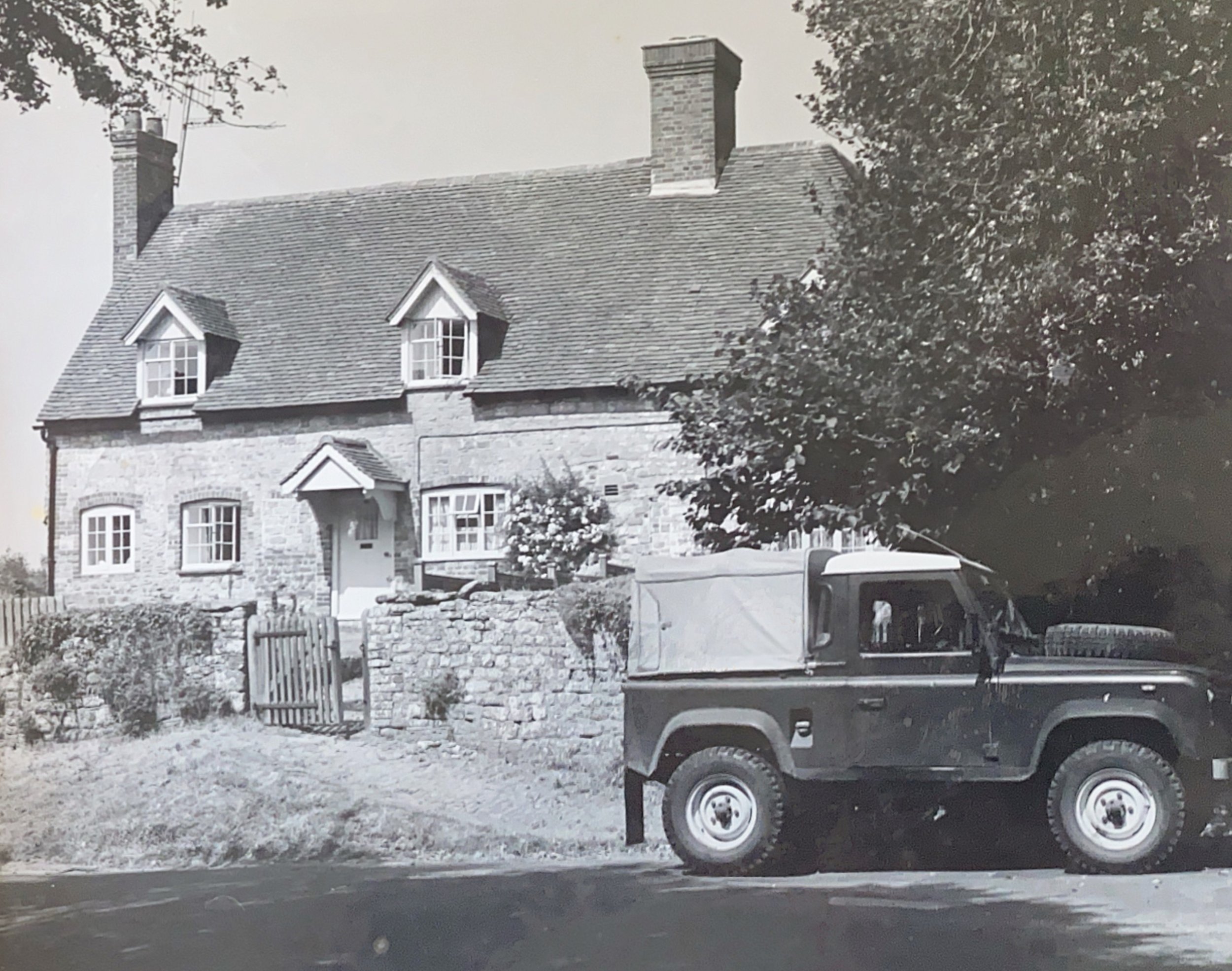
One building. C18 exterior to a possibly older building. Stone rubble with red brick dressings and quoins. Tiled roof. Casement windows. One storey and attic. Three windows. Three dormers.
Listing NGR: SU9008223081
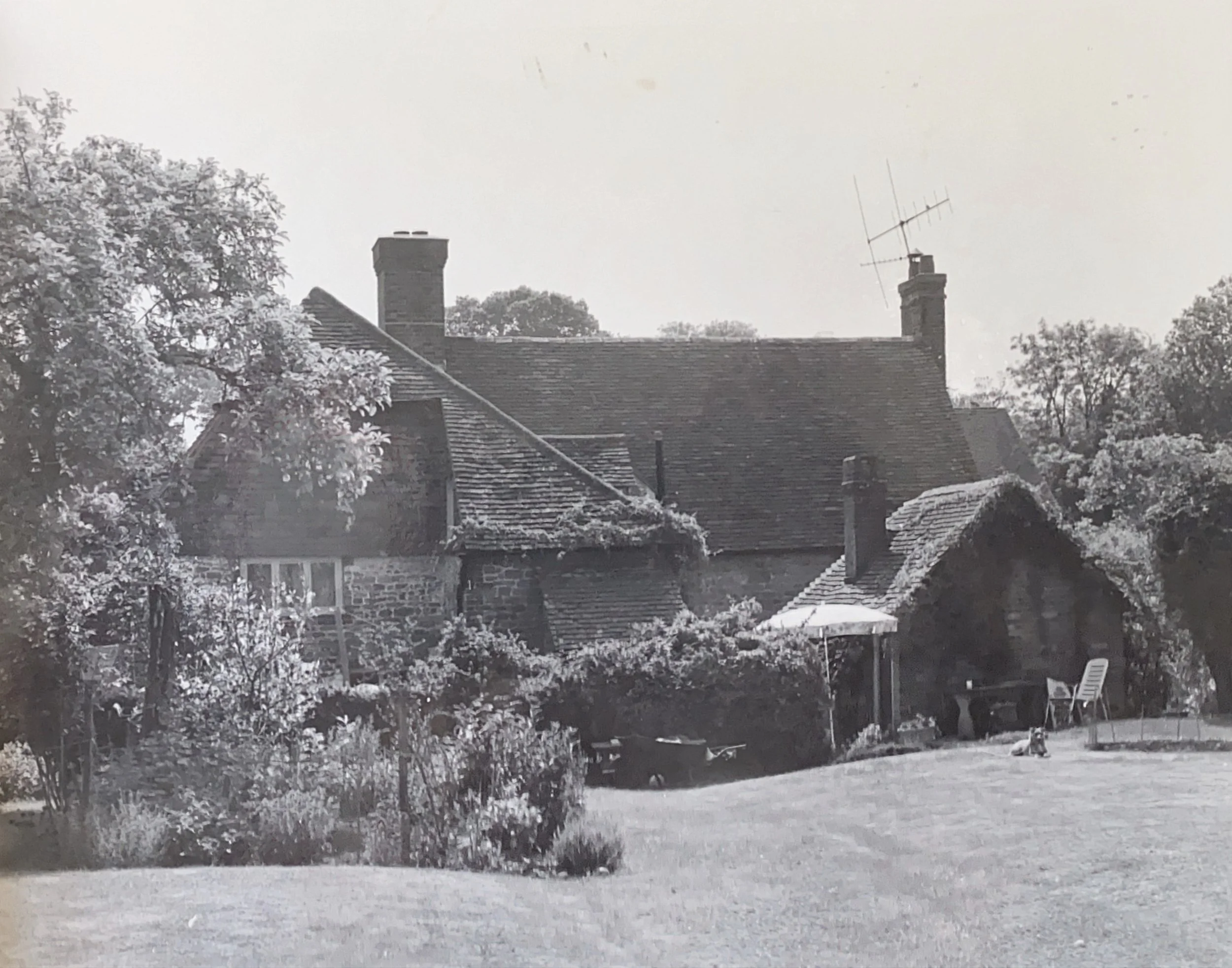
Holly Cottage - 38, 39, 40 Easebourne Street
The Historic England list entry for Holly Cottage is for one building.
No 38 and 39 were noted as being 4 roomed dwellings in the 1911 Census. Holly Cottage no 40 was larger having 5 rooms.
No 38
This was the family home of Daniel and Harriet Hearsey in 1911. Aged 58 and 54 years respectively, they had been married for 34 years and were parents to eight children. Daniel was a Labourer, son William (age 33) was a Cowman on a Farm, Herbert (age 31) was also a labourer, Albert (age 26) was a Groom, Percy (age 14) was a Page Boy (meaning, engaged in service). Daughter Rose (age 17) was a Domestic Servant. Staying with them on the night of the census was Ernest Courtney a 26-year-old Able Seaman in the Royal Navy.
No 39
Robert George Coombes, a Garden Labourer (age 60) born in Midhurst, and his wife Betsy, were living here in 1911.
No 40 - Holly Cottage
Frederick Geeson and his wife Nancy were resident at Holly Cottage from 1905 when the Kelly’s Directory of that year noted them as “Private Residents”. Frederick was born in 1848 in Denton Lincolnshire. His occupation as a Gardener had taken him to Islington, and Ticehurst, where he and Nancy had married in 1878. Gardening also took him to Kenford in Devon, where his three daughters Ada, Mary and Edith were born. The family moved to Easebourne, where he was resident from 1901 to his demise in 1927.